Hegseth: Britain put American lives at risk
Restrictions on US troops’ use of British bases during Iran war were ‘shameful’, says Trump’s secretary of defence
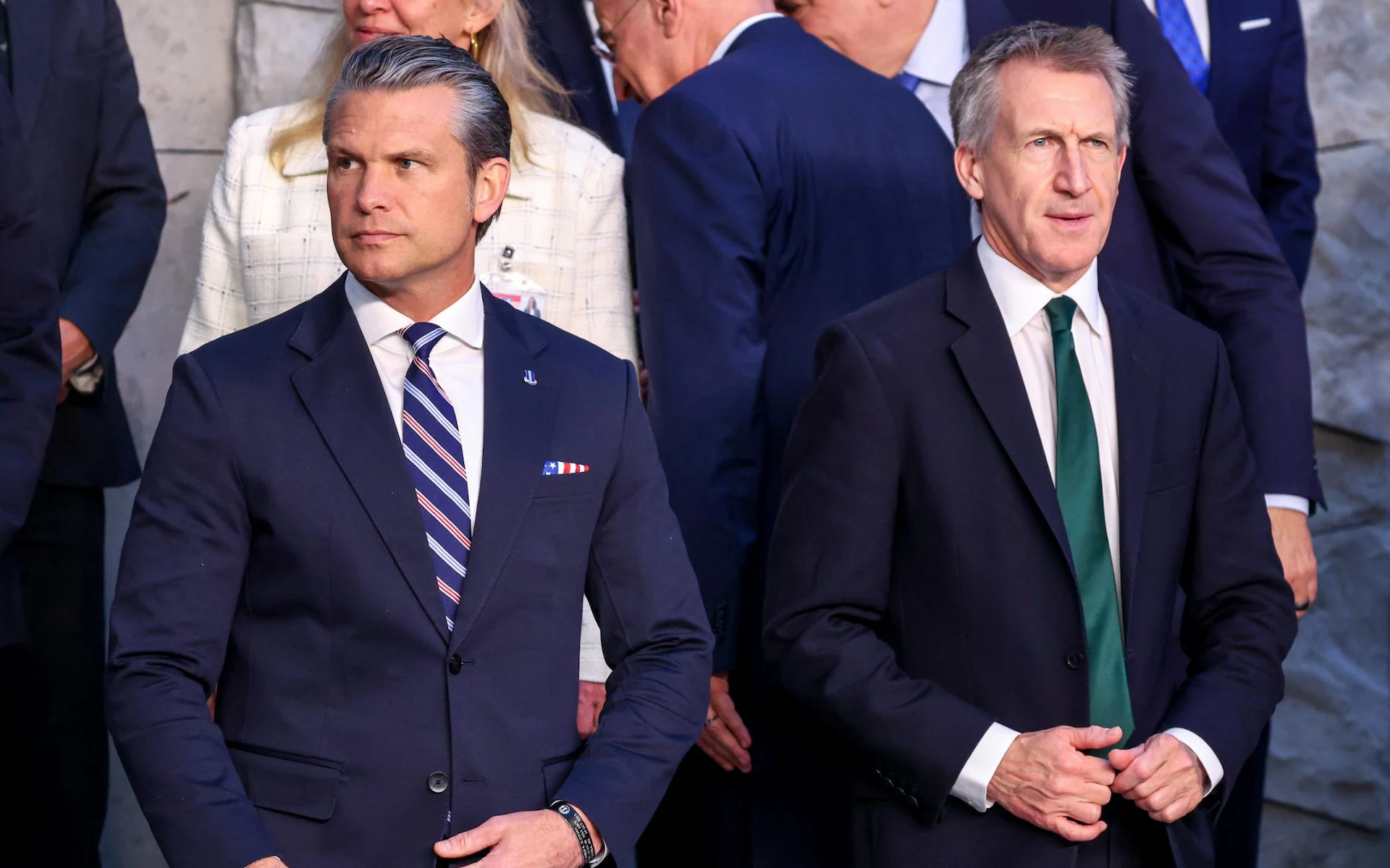
A cold shoulder? Pete Hegseth (left) and Dan Jarvis, the UK Defence Secretary, at the Nato meeting on Thursday Credit: Omar Havana/Getty Images
Britain put the lives of US troops at risk by restricting access to military bases in the UK during the Iran war, Pete Hegseth has said.
Speaking at a meeting of Nato’s defence ministers in Brussels, the US secretary of defence criticised members of the alliance, which includes Britain, for their reticence during the US-led operations, describing the situation as “shameful”.
Mr Hegseth also announced a six-month review of US forces in Europe, as he warned allies on the Continent of cuts if they refused to increase defence spending in line with Nato targets.
Hours after Donald Trump signed a deal to end the Iran war, Mr Hegseth told allies that they had failed the US president’s test to see whether they were willing to support Washington in the conflict.
Many European leaders, including Sir Keir Starmer, the Prime Minister, restricted access to bases or denied overflight rights to US forces during the conflict.
“All he [Mr Trump] said was that our jets would need to take off from bases in Europe or ... our ships from ports, to strike targets in the Middle East, Iranian targets that threaten European interests even more directly than they threaten us,” Mr Hegseth told the meeting on Thursday.
“But too many of our allies said no or tried to drown us in arcane legal debates or criticised us publicly for doing what they aren’t prepared or able to do themselves.”
He added: “It was shameful. These allies, they put America’s sons and daughters, our sons and daughters at risk by denying them the predictable access facing overflight that never should have been in question at all.”
The comments will come as a blow to European allies, especially Britain, France, Germany and Italy, who this week spent time at a G7 summit in France trying to placate Mr Trump’s anger over their refusal to join the war.
The US president previously told The Telegraph that the lack of assistance had caused him to question his country’s membership of the Nato alliance.
The Pentagon has already informed allies that it intends to scale back the level of support it will provide in the event that Article 5, Nato’s mutual defence clause, is triggered.
Gen Alexus Grynkewich, Nato’s supreme allied commander, said this would mean that an aircraft carrier, support ships, air-to-air refuelling planes and dozens of fighter jets would no longer be available in a crisis.
On Thursday, Mark Rutte, Nato’s secretary-general, said that the withdrawal of American forces from Europe had taken place with “immediate” effect.
Mr Hegseth also warned that further cuts should be expected if “free-riding” European governments failed to hit a defence spending target of 5 per cent of their GDP.
“It’s a review that some countries will fail, and others will pass with flying colours,” the war secretary said.
Describing a rebooted vision for Nato, focused on Europe taking more responsibility, he added: “[There are] some that still need to do more, and we will be candid about that, both in private and in public. I think that’s important: friends being honest with friends.
“Nato 3.0 is post-Cold War recognition that it needs to go back to a real hardline military alliance that has real military capabilities capable of deterring right here on the Continent and taking the lead for the conventional defence of Europe.”
Nato defence ministers will also meet Volodymyr Zelensky at a meeting of the Ukraine Defence Contact Group, which co-ordinates military aid to Kyiv.
The Ukrainian president held talks with Mr Rutte over deliveries of much-needed air defence munitions.
He also raised the prospect of securing licences so that Ukrainian defence firms could produce their own American-designed Patriot interceptors, as The Telegraph reported earlier this week.
Both Germany and the Netherlands have pledged hundreds of millions of dollars so that Kyiv can buy the surface-to-air missiles.